Subtotal $0.00



92
Every day, over 7 million blog posts go live online, making it harder than ever to get noticed. That’s where AI blog writing becomes a game-changer. By leveraging AI tools for blogging, creators can now write faster, better, and more consistently.
But effective AI blog content isn’t about letting a machine take over. It’s a collaboration between you and AI, combining your creativity with the power of machine learning and natural language processing (NLP).
I’ve seen how AI blog writers improve both content quality and workflow. From beating writer’s block to scaling daily output, these tools help keep your blog fresh and active. And remember—AI-generated images can boost views by up to 94%, making AI-assisted visuals just as essential.
In this AI blogging guide, I’ll walk you through how to use AI for blog writing step-by-step, while preserving your authentic voice. Whether you’re new to blogging or looking to scale, this guide will show how AI content creation can transform your strategy.
Understand the Role of AI in Blog Writing

Image Source: 601media
AI technology has quickly integrated itself into content creation workflows across the digital world. More than 75% of marketers now use AI tools to some degree in their work, with approximately 19% of businesses leveraging these technologies specifically to generate content.
What is AI blog writing?
AI blog writing refers to using artificial intelligence technology to produce text-based content through natural language processing (NLP) and machine learning. In this approach, you provide written prompts to AI tools, which then generate human-like text for blog posts, articles, or other content formats. These systems work by analyzing vast amounts of existing online content, identifying patterns, and producing new combinations of text that match your specified requirements.
How AI tools assist in content creation
AI tools serve as powerful allies in the content creation process, primarily by saving time and boosting productivity. A typical 500-word blog post traditionally takes around 4 hours to complete, but AI assistance can drastically reduce this timeframe. These tools excel at:
- Generating topic ideas and creating outlines
- Researching and summarizing information
- Drafting initial content versions
- Optimizing text for SEO and readability
- Creating titles and meta descriptions
Furthermore, AI writing assistants help overcome writer’s block by providing starting points that can spark creativity. They’re especially valuable for handling repetitive writing tasks like product descriptions or basic social media posts.
Why AI is not a full replacement for human writers
Despite their capabilities, AI writing tools have significant limitations. Most notably, they cannot offer unique perspectives, insights, or original thought. AI produces content based on consensus information rather than perspective-driven or information-gain content.
Moreover, AI systems sometimes generate inaccurate information or “hallucinate” facts completely. One law firm discovered this painfully when ChatGPT fabricated entire legal cases that appeared authentic but didn’t exist.
Consequently, AI-generated content often lacks the human touch – the emotion, empathy, and nuance that connect with readers. As one expert explains, “These limitations highlight the importance of continued research and development in this area, to improve the quality and accuracy of AI-generated writing“.
Step-by-Step: Using AI to Write Better Blog Posts
Creating quality blog content involves more than simply prompting an AI tool and publishing whatever it produces. Let me guide you through a systematic approach to harnessing AI for more effective blog posts.
1. Generate blog topic ideas with AI
Finding compelling topics is the foundation of successful blogging. AI blog topic generators, such as HubSpot’s tool, provide a constant stream of ideas based on your keywords or themes, helping you overcome writer’s block. These tools analyze search patterns and trending topics to suggest content that resonates with your audience. For best results, enter specific keywords related to your niche to get targeted suggestions.
2. Research and gather insights using AI tools
Once you have a topic, AI can analyze top-ranking content for that subject. Tools like Frase instantly examine competitor posts to identify key topics, headers, questions, and statistics you should include. This comprehensive analysis helps ensure your content covers all relevant aspects of the topic that readers expect.
3. Create a blog outline with AI assistance
AI outline generators transform your topic into a logical content framework. Simply enter your blog topic, and the tool will generate a structured outline complete with an introduction, main points, and conclusion. Some tools even incorporate SEO-friendly elements automatically, ensuring your structure supports ranking goals.
4. Draft your blog post using an AI blog writer
With your outline ready, AI blog writers can expand each section into complete paragraphs. Tools like RightBlogger can craft your article either all at once or section by section. For more control, provide the AI with specific instructions about tone, style, and key points to include.
5. Edit and refine the draft for clarity and tone
Raw AI output typically needs human refinement. Begin by reading the entire draft to identify factual errors and inconsistencies. Look for repetitive sentence structures and abrupt transitions between paragraphs, which are common issues in AI-generated content. Add personal examples, anecdotes, and unique insights to make the content genuinely yours.
6. Optimize for SEO and readability
Finally, use AI tools like Hemingway Editor to improve clarity and directness. These applications highlight complex sentences, passive voice, and readability issues. Many AI tools can also suggest keyword optimization opportunities, meta descriptions, and other SEO improvements to boost your content’s visibility in search results.
Enhance Your Content with AI Tools
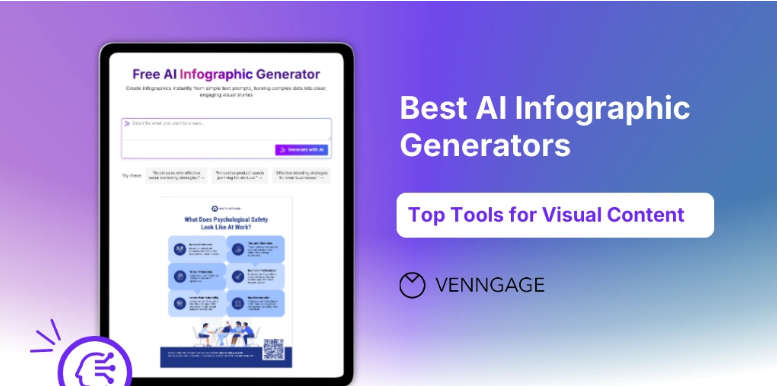
Image Source: Venngage
Beyond the writing process itself, AI tools can elevate your blog posts through enhanced visual elements and expanded reach. Let’s explore how these supplementary tools can take your content to the next level.
Generate AI Titles and Meta Descriptions
Strong titles and meta descriptions improve click-through rates. Tools like Yoast SEO analyze your content to create engaging, keyword-optimized snippets that boost search visibility.
Create AI-Generated Images
Posts with visuals get 94% more views. Tools like Canva’s Magic Media turn text prompts into unique, branded AI images, eliminating the need for stock photos and helping your blog stand out.
Repurpose Content with AI
Use AI content repurposing tools to turn blog posts into social media captions, video scripts, or summaries—expanding your reach with minimal effort.
Translate and Localize with AI
AI translation tools adapt your blog for global audiences by translating and localizing content across 280+ languages, preserving tone and cultural relevance while reducing costs.
Avoid Common Pitfalls of AI-Generated Blog Posts

Image Source: AIContentfy
Successful AI blog writing requires awareness of potential pitfalls that can undermine your content quality. Understanding these challenges helps you create more effective AI-generated blog posts.
Over-Reliance on AI Without Human Editing
AI improves efficiency but can’t replace human creativity. Without human review, AI-generated content often feels flat and lacks emotional connection. Editing is essential to ensure accuracy, maintain voice, and add personal insights that AI can’t replicate.
Fact-Checking and Avoiding Hallucinations
AI sometimes presents false information as fact. These “hallucinations” can damage credibility. Always verify names, dates, stats, and quotes with trusted sources. Treat AI as a writing assistant—not an authority—and request source citations when possible.
Maintaining Originality and Brand Voice
Generic AI content dilutes brand identity. Define your brand’s tone and style before using AI tools. Train the tool with past content and guide it with specific prompts. Rewrite and refine outputs to ensure your voice comes through clearly.
Conclusion
AI has reshaped blogging by making content creation faster and more accessible. From idea generation to visual creation, it supports every stage of the process. Still, the best results come from combining AI’s speed with human creativity.
Use AI as a collaborator, not a replacement. Fact-check rigorously and let your voice lead the way. Your readers connect with you, not the machine. As you explore AI-powered writing, build a workflow that enhances both your productivity and your authenticity.
If this guide helped, explore more articles on emerging content creation tools to keep growing as a digital creator.
Key Takeaways
Master the art of AI-assisted blogging with these essential insights for creating high-quality content efficiently while maintaining your authentic voice.
• Follow a 6-step AI workflow: Generate topics, research insights, create outlines, draft content, edit thoroughly, and optimize for SEO to maximize effectiveness.
• AI enhances but doesn’t replace human creativity: Use AI as a collaborative partner for efficiency while adding personal insights, fact-checking, and maintaining your unique brand voice.
• Leverage AI beyond writing: Generate compelling titles, create custom visuals, repurpose content across platforms, and translate for global reach to amplify your content’s impact.
• Avoid common pitfalls: Never publish raw AI output—always fact-check for hallucinations, edit for authenticity, and ensure content reflects your distinctive style and expertise.
• Balance efficiency with quality: AI can reduce a 4-hour blog post to minutes of work, but successful content still requires human oversight, creativity, and editorial judgment.
The future of blogging belongs to creators who skillfully combine AI’s technological efficiency with human creativity, producing content that’s both scalable and genuinely engaging for their audience.
FAQs
Q1. Is it ethical to use AI for writing blog posts?
Yes, it’s ethical to use AI as a writing assistant for blog posts. AI tools can help generate ideas, improve editing, and enhance content. However, it’s important to maintain creative control, fact-check the information, and ensure the final output aligns with your unique voice and message.
Q2. What’s a simple process for writing a blog post with AI?
A basic process for AI-assisted blog writing includes:
1) Use AI to generate an outline on your chosen topic.
2) Have AI draft an introduction and conclusion.
3) Use AI to expand on each section of the outline.
4) Generate SEO-optimized titles and meta descriptions.
5) Thoroughly edit and refine the AI-generated content to add your personal touch and ensure accuracy.
Q3. How can beginners start using AI for writing?
Beginners can start by using user-friendly AI writing tools like Google Docs’ “Help me write” feature. Simply open a document, click where you want to write, select the AI assistant, and enter a prompt describing what you want to create. Start with simple tasks like generating ideas or short paragraphs, then gradually explore more advanced AI writing features as you become comfortable.
Q4. What are some top AI tools for blog writing?
While there are many AI writing tools available, some popular options for blog writing include Copymatic, Jasper, and Copy.ai. These tools offer features like SEO optimization, content generation, and editing assistance. However, it’s important to explore different options to find the one that best suits your specific needs and writing style.
Q5. How can I maintain my unique voice when using AI for Blogging?
To maintain your unique voice when using AI, start by clearly defining your brand’s personality and tone. Use specific prompts that guide the AI towards your desired style. Always thoroughly edit and rewrite AI-generated content, adding personal insights, examples, and emotional elements. Remember that AI should enhance your creativity, not replace it. Regularly review and refine your content to ensure it consistently reflects your authentic voice.